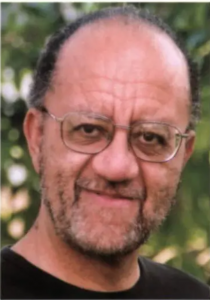
Like Mir, Shaw and Lee have taken a classic text and recast it in the furnace of their imaginations. Here is a Mir never seen in English before, witty, rhetorically complex, embodying passion, and making us laugh painfully with his skillfully deployed humor. Here are his poems, no longer receding into the past like ships in the mist, no longer separated from us by the veil of language. They sprout from the ground with color and energy, and in this book, reinvented, they live.
–Tony Barnstone, , Professor of English Whittier College, Poet, Author, co-translator of Faces Hidden in the Dust: Selected Ghazals of Ghalib
Rendered hemistich by hemistich, Mir’s verses come alive with the poet’s aesthetic vitalities, his two worlds – the mundane and the divine, his philosophy of love and life. The translations carry a certain aura of light and shade emanating from the original Mir text. The joy these translations offer lies not so much in transcending the strict bonds of the ghazal artifice as in the enhancement of the virtues of what is being said. Their excellence emerges from free versions, escape from self-indulgence; commendable.
The translators have attempted the primacy of the original and sustained fidelity with passion and precision.
— Bhupender Parihar Aziz, Urdu poet and translator, author, Ghalib: Decolonizing Meaning
Bilal A. Shaw is a Kashmiri-American scientist who completed his Ph.D. from the University of Southern California in quantum information science. He studied Mathematics at Whittier College, California. In the past he has worked on DNA-based computation, software architecture, and theoretical self-assembly. Currently he works as a senior director of data-science in identity and fraud analytics at Transunion. With Tony Barnstone he recently published Faces Hidden in the Dust: Selected Ghazals of Ghalib (White Pine Press, 2022). Some of these ghazals have been published in Literary Matters, Able Muse, Arroyo Literary Review, and Pratik. He currently lives and works in Santa Monica, California.
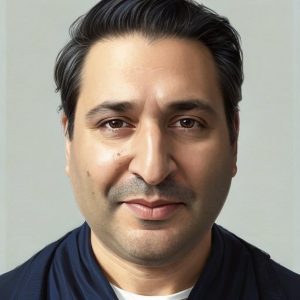
Anthony A. Lee, Ph.D. (History, UCLA, 2007) is retired as a lecturer in African American history at UCLA and now continues his research as an independent scholar. He is the General Editor of the academic series, Studies in the Babi and Baha’i Religions (Kalimat Press, 1982- ), now in its twenty-eighth volume. He translated, with Amin Banani and Jascha Kessler, Tahirih: A Portrait in Poetry: Selected Poems of Qurratu’l-‘Ayn (Kalimat Press, 2005). Also with Amin Banani, Rumi: 53 Secrets from the Tavern of Love (White Cloud Press, 2014); with Nesreen Akhtarkhavari, Love Is My Savior: Arabic Poems of Rumi (MSU Press, 2016), Wine of Reunion: Arabic Poems of Rumi (MSU Press, 2017), and Desert Sorrows: Poems of Tayseer al-Sboul (MSU Press: 2015).